
SafeCREW published its Final Report “Climate-resilient management for safe water supply systems” now. The public report highlights the key outcomes achieved by twelve research institutes and industry partners across Europe after 42 months of research and innovation. Until April 2026 the partners collaborated to develop innovative tools and strategies that address emerging water quality challenges.
SafeCREW was funded by Horizon Europe to contribute to the safe production anddistribution of drinking water in the context of climate change. Four main objectives guided the SafeCREW approach ranging from the development of monitoring tools and innovative drinking water treatment processes via strategies for safe drinking water distribution to integrated risk assessment frameworks to guide future interventions that sustain safe drinking water supply in the face of climate change. The innovations were tested and applied in four cases studies in Germany, Italy, Spain and Ukraine following the drinking water supply system (DWSS) from the raw water source via the drinking water treatment plant (DWTP) and the drinking water distribution network (DWDN) to the consumers. A selection of SafeCREW’s key achievements is given below.
New monitoring tools for comprehensive water quality characterisation
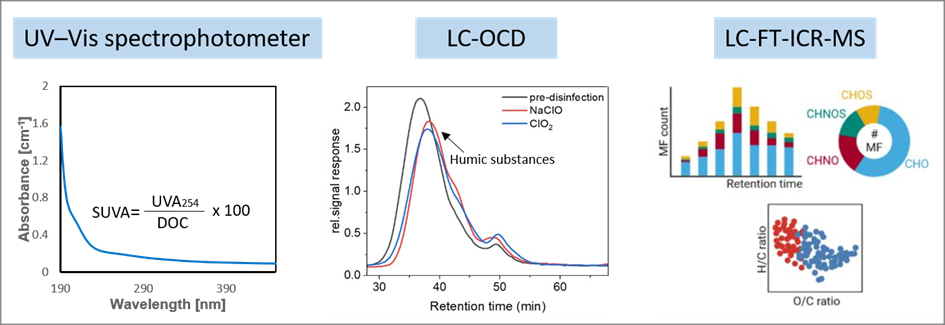
SafeCREW developed a combined set of complementary and flexible tools that will overcome still existing hurdles in chemical, toxicological and microbiological characterisation of water. These comprise tools to improve NOM (natural organic matter) characterisation models, detect previously unknown polar DBPs, differentiate the four main trihalomethanes (THMs) by online-monitoring technique, assess toxicity in complex water mixtures by rapid biotests and effectively monitor microbial loads continuously.
New processes for reducing disinfection by-products
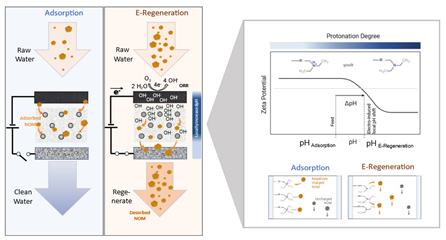
Five novel treatment processes to actively respond to identified threats were developed to upgrade drinking water treatment processes according to a multi-barrier approach for non-disinfected and for disinfected drinking water supply systems. These treatment processes address enhanced NOM removal targeting especially those with a high DBP formation potential. They comprise novel adsorber membranes with reagent-free electrochemical regeneration, optimised advanced oxidation processes, conventional and innovative materials and processes for improved adsorption of DBPs and DBP precursors and improved automatic control for NOM removal in coagulation-flocculation systems.
Strategies for safe drinking water distribution to avoid water quality deterioration up to final consumers
SafeCREW developed tools to overcome the multiple challenges around proper handling of DWDN and investigated links between quality of distributed drinking water and boundary conditions. These tools comprise soft sensors for DBP monitoring, DBP prediction models in drinking water distribution networks and a test protocol to understand the interaction between disinfectants and materials in contact with water.
Integrated risk assessment framework to guide future interventions that sustain safe drinking water supply in the face of climate change
A range of supporting tools, risk assessment framework, guidelines and policy briefs have been developed based on the novel analytical methods, the treatment technologies and the model developments for drinking water supply systems. These guide future interventions in drinking water supply systems in the face of climate change. They comprise climate change scenarios relevant for DBPs, the SafeCREW App (DBP Risk Explorer – a guideline for monitoring water quality and the management of DBPs in drinking water distribution networks); and an integrated risk assessment framework to support decision making in drinking water supply systems by balancing microbial and chemical risks.
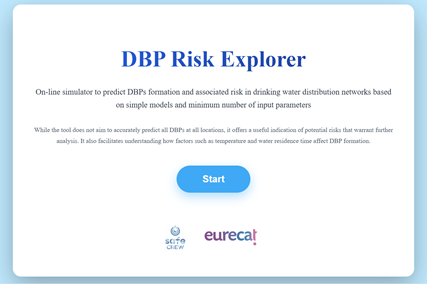
DBP Risk Explorer – a DWDN management tool based on chemical risk assessment QCRA and DBP prediction models. (Copyright Eurecat)
Transfer of solutions to utilities – application in SafeCREW case studies
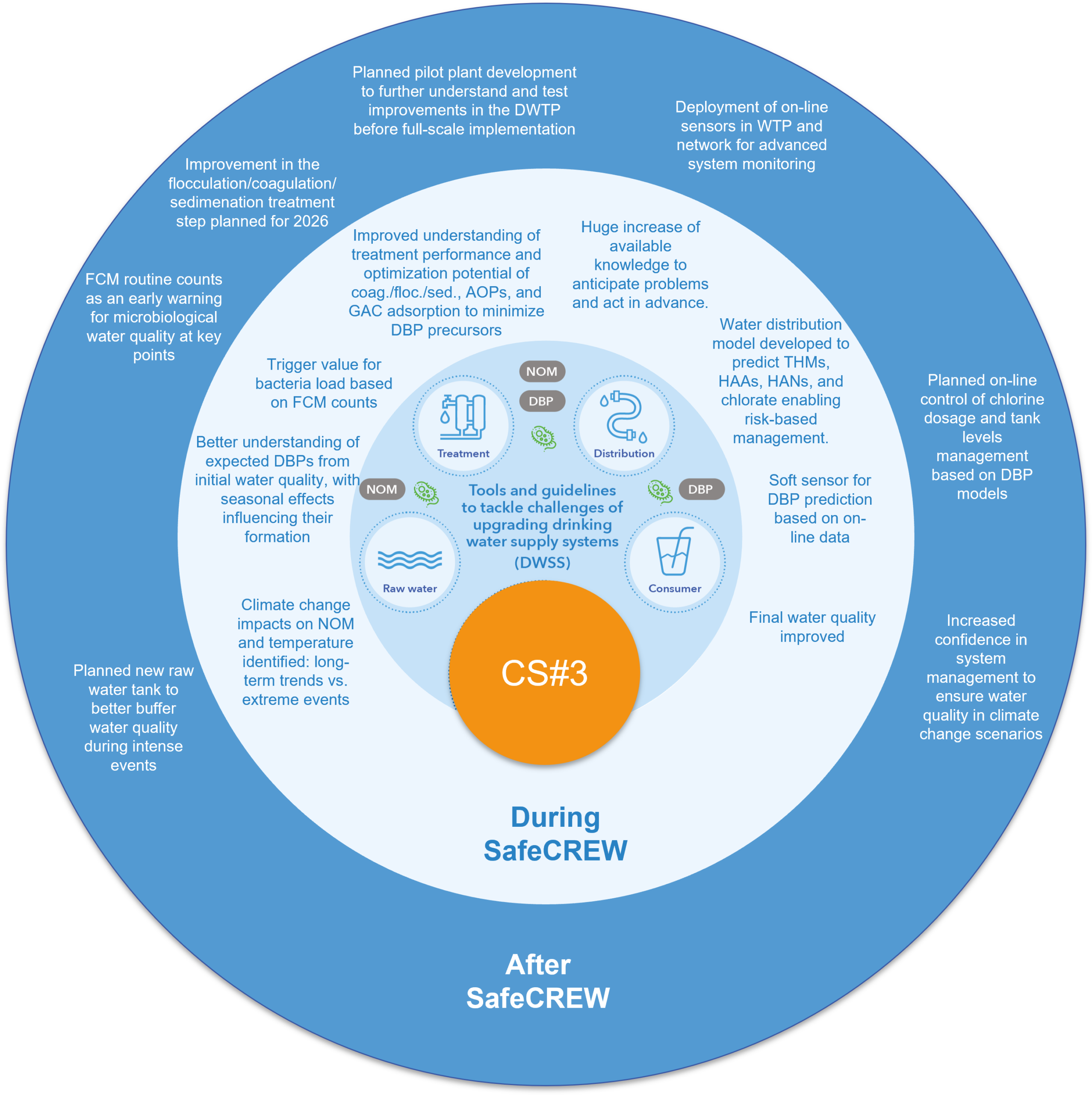
Optimisation of disinfection in the drinking water distribution network of case study #2 (Milan, Italy) has been facilitated by the validation of the online microbial monitoring tools and the soft sensor in the case study. Case study #4 in western Ukraine applied the knowledge gained from the other three case studies to develop water safety plans (WSP) and adopt soft sensor technology. In addition, a Centre of Excellence for Water Management (CEWM) has been conceptualised to modernise applied water research and development in western Ukraine. Case study #3 illustrates the outcomes and the impact of SafeCREW well. Many of SafeCREW’s innovations were developed and tested in this case study, with a focus on exploring new treatment solutions, the novel DBP prediction models and soft sensors enabling risk-based management and acting in advance.