SafeCREW is working on Four case studies
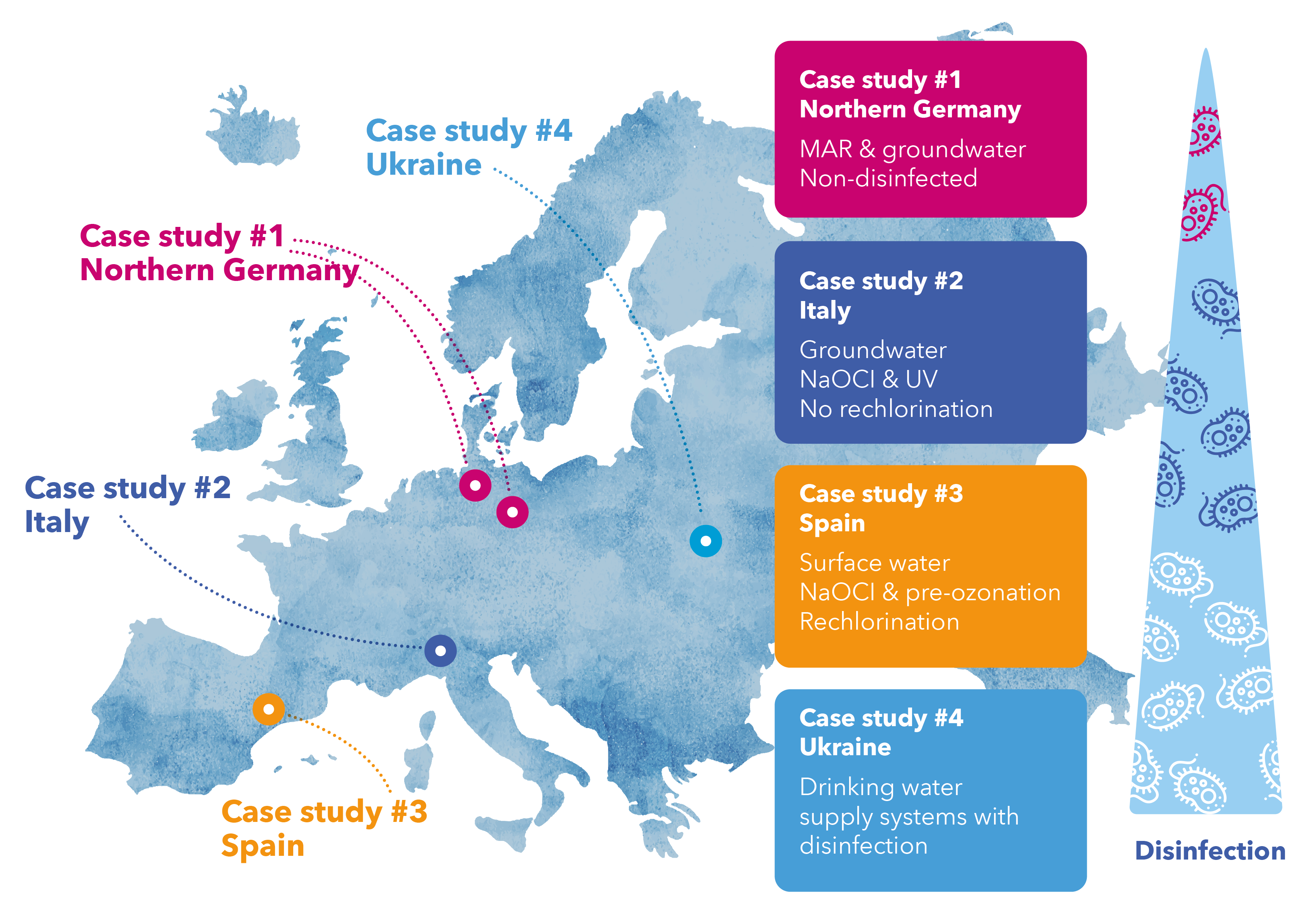
Drinking water supply systems in Europe vary with respect to water sources, water quality, and geographical and climate conditions and thus apply different drinking water treatments. The need for disinfection to provide water safe for human health is already common practice in some drinking water supply systems (DWSS) and may become necessary more often as a consequence of climate change. SafeCREW focusses on disinfection and the formation of disinfection by-products.
SafeCREW works on four case study sites which are located in northern, southern and eastern Europe. These are representative of non-disinfected and disinfected DWSS with various source water conditions in the different EU regions.
The German case study (CS#1) includes two major cities (Berlin, Hamburg) that use Managed Aquifer Recharge (MAR) and ambient groundwater as a drinking water source and currently operate without disinfection treatment on a regular basis.
The site in Milan (Italy, CS#2) treats local groundwater, which is disinfected only before entering the drinking water distribution network.
In the case study in Tarragona (Spain, CS#3) drinking water is disinfected in the drinking water treatment plant (DWTP) as well as in the drinking water distribution network.
In the case study in Rivne (Ukraine, CS#4) drinking water is disinfected in the drinking water treatment plant.
For the northern case study, SafeCREW has been working on characterising the microbial quality of the source water and the subsequent subsurface passage. It aims at minimising the potential ramifications of introducing disinfectants into the existing non-disinfected drinking water distribution network.
For the two southern drinking water supply systems with disinfection, the aim of SafeCREW is to minimise disinfectant dosages and disinfection by-product concentrations on the basis of novel long-term monitoring approaches and pre-treatment of DBP precursors.
For the eastern case study, SafeCREW aims to increase the level of water safety in drinking water supply systems.
CS#1: Northern Germany
Near-natural non-disinfected drinking water supply


Case study #1 can be characterised as “near-natural non-disinfected drinking water supply“. The two water utilities in Berlin and Hamburg, both in northern Germany, supply a population of more than 3.7 and 1.9 million respectively. In both cities, the technical drinking water treatment consists of aeration and rapid sand filtration without chemical disinfection on a regular basis. In Berlin, the subsurface passage during induced bank filtration (BF) before abstraction is the main barrier to ensure microbially safe drinking water. In Hamburg, water from deep groundwater wells is used for drinking water production. This water is well protected but a few shallow wells exist that deliver bank filtrate to drinking water production.
Status at project start: lack of innovative microbial monitoring
Berlin and Hamburg have non-disinfected treatment pathways and drinking water distribution networks (DWDN) with natural and deliberately recharged groundwater as source water. Existing early-warning systems do not include innovative microbial monitoring. Despite potential microbial growth in DWDN, utilities cannot quickly shift to chemical disinfection, because of a looming threat of significant DBP formation due to increased NOM concentrations.
Key achievements at the end of the project
(I) The subsurface’s natural log-reduction capacity, or hygienic barrier value for pathogens, is estimated more accurately now.
(II) A site-specific quantitative microbial risk assessment (QMRA) is conducted to evaluate human health risks associated with the recovered water, based on microbial enrichment by ultrafiltration.
(III) New insights were gained into the mechanisms of microbial communities and the removal of organic substances under groundwater recharge conditions dominated by anoxic conditions.
(IV) Advanced characterisation of natural organic matter (NOM) regarding soil passage for artificial groundwater recharge, highlighting seasonal variations, and demonstrating an effective barrier against pathogens and NOM.
Contact:
Anissa Grieb, DVGW-TUHH (anissa.grieb (at) tuhh.de);
Christoph Sprenger, KWB (christoph.sprenger (at) kompetenz-wasser.de)
CS#2: Milan, Italy
Chlorinated drinking water supply system
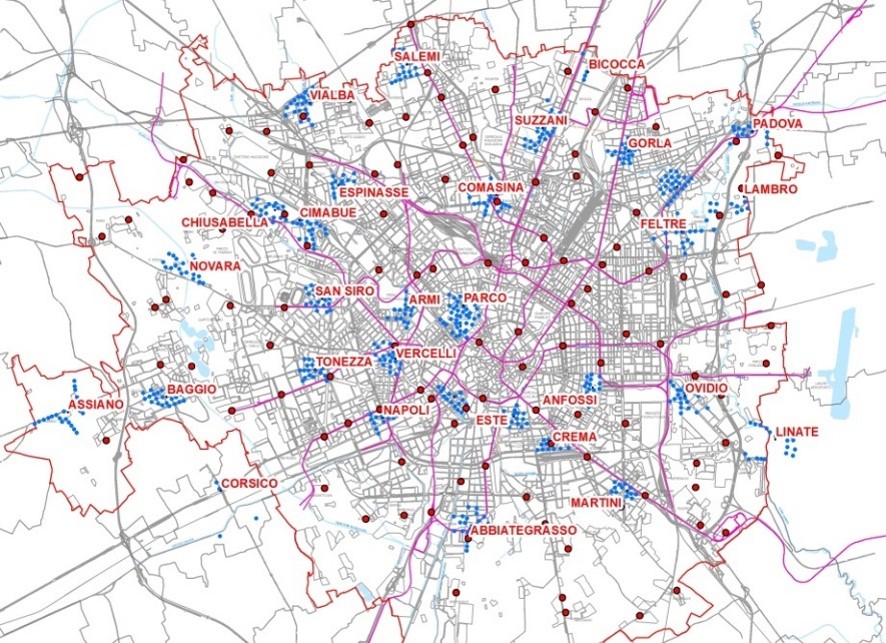
In Milan, 400 active wells produce 220 million m3 of drinking water annually. Water abstracted from the aquifer is treated in 28 drinking water treatment plants (DWTPs). The treatment plants consist of a treatment section, a storage tank and pumps for distribution to the aqueduct. The treatment mainly involves filtration using activated carbon (AC) and disinfection with sodium hypochlorite (NaOCl). The drinking water distribution network (DWDN) is about 2,228 km long, serving 1.4 million inhabitants.
Status at project start: Lack of knowledge about interaction of disinfectants with material
Up to the start of the project, considering the good microbiological quality of supplied groundwater, the disinfection process was not optimised. In addition, in a highly urbanised area it is critical to set up working sites for pipe renovation, preferring relining methods, but the knowledge about the interaction between epoxy resins components and water is scarce, especially in the case of presence of residual disinfectant. Current research is evaluating how to exploit monitoring devices for studying bacterial dynamics and communities in treated water. In addition, the potential migration of bisphenol A (BPA) from epoxy resins is under investigation.
Key achievements at the end of the project
(I) Based on the collected data, it is now possible to prepare guidelines for optimising disinfection operating parameters. This result will be supported by a soft sensor that processes data in real time, enabling management decisions based on the actual concentration of compounds present in the water.
(II) The data gathered throughout the project will also allow MM to better define the link between the formation of DBPs and the concentration of residual chlorine in the water.
(III) Regarding the release from the resins, tests did not reveal significant leaching; in addition, the data collected will be useful for defining the interactions that may occur when chlorinated water comes in contact with epoxy resins.
(IV) During the project a passive sampler has been tested with the aim of sampling specific microorganisms over a defined timeframe. This passive sampler could be useful for the collection of microorganisms and supports an early-warning system.
Contact:
Luca Creston, Operations manager at MM (l.creston (at) mmspa.eu)
CS#3: Tarragona, Spain
Chlorinated drinking water supply system
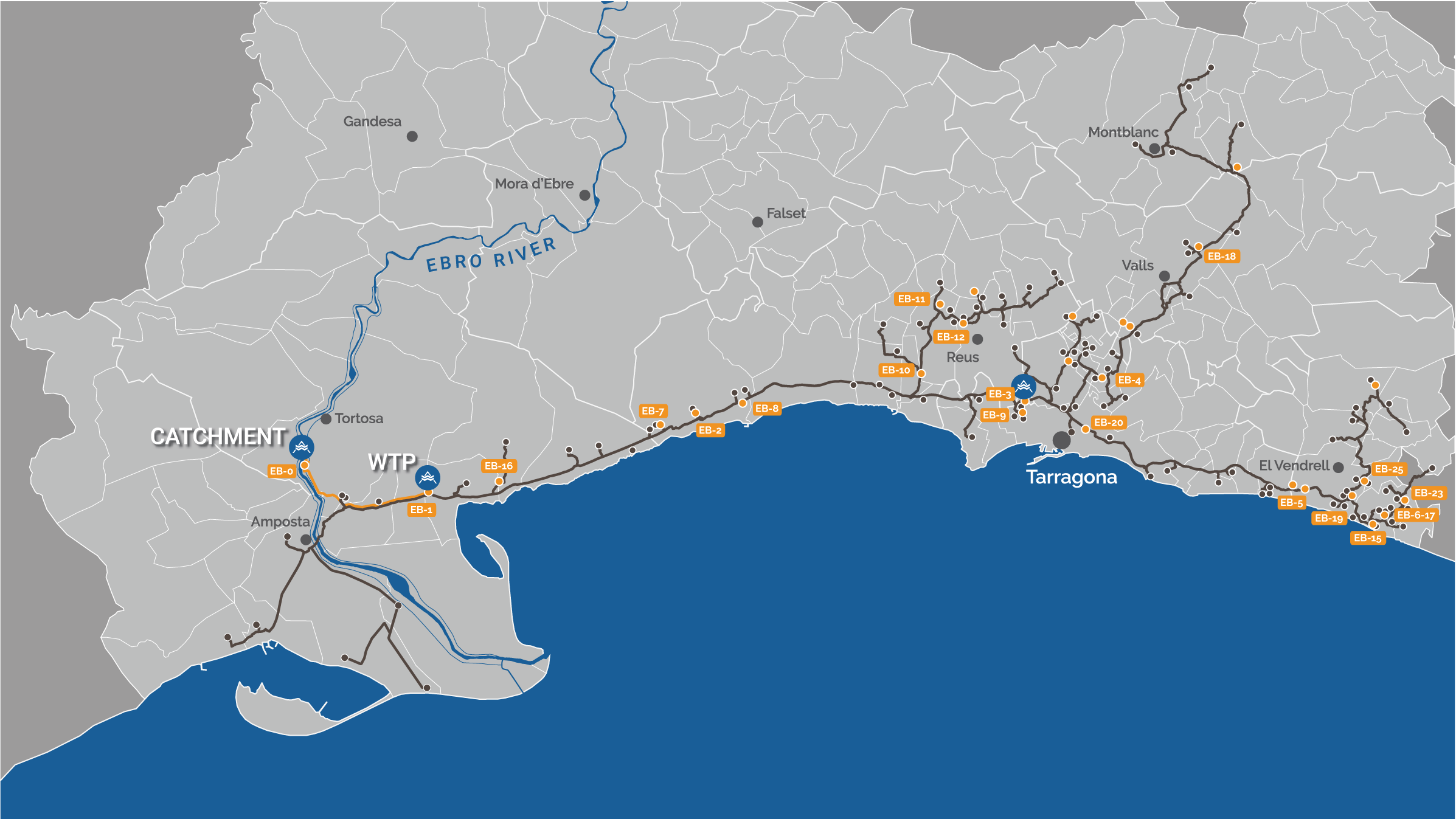
The full-scale drinking water treatment plant (DWTP) with a 400 km distribution network serves 800,000 inhabitants in winter and 1.5 million in summer. Source water from the Ebro River undergoes pre-ozonation, flocculation, sand filtration, main-stage ozonation, activated carbon filtration, ultraviolet disinfection, and final disinfection with sodium hypochlorite with several chlorination boosters along the network to keep the required level of residual free chlorine.
Status at project start: Manual parameter adjustment/ Understanding network dynamics
Current DWTP operation involves manual parameter adjustment based on discrete sampling and water quality analyses, which cannot guarantee compliance with the EU DWD at all points of supply. DWTP set-points are based on online water quality values such as turbidity or absorbance, and water quality values from discrete sampling such as total organic carbon (TOC) values, without knowledge of site-specific NOM composition, current DBP formation kinetics and final effect on DBP formation.
Drinking water distribution network (DWDN) chlorination booster set-points are based on local residual free chlorine targets without knowledge of the DBP formation network dynamics. No actions to increase climate change resiliency have been taken in the DWTP or DWDN systems, since no studies on the specific threats were available.
Key achievements at the end of the project
(I) In-depth knowledge on how changes in DWTP processes result in reduced DBP formation potential not only by lowering the NOM quantity but also by changing NOM chemical properties.
(II) Models developed and ready to be implemented in an early alert system predicting the final generation of DBPs from the expected influent water to the DWTP, and recommended process changes to prevent formation.
(III) Risk-based management tool of the DWTP and DWDN which combines chemical, toxicity and microbial risk in one performance indicator set ready for implementation.
Contact:
Andreu Fargas Marques, Chief of Innovation at CAT (afargas (at) ccaait.cat)
CS#4: Western Ukraine
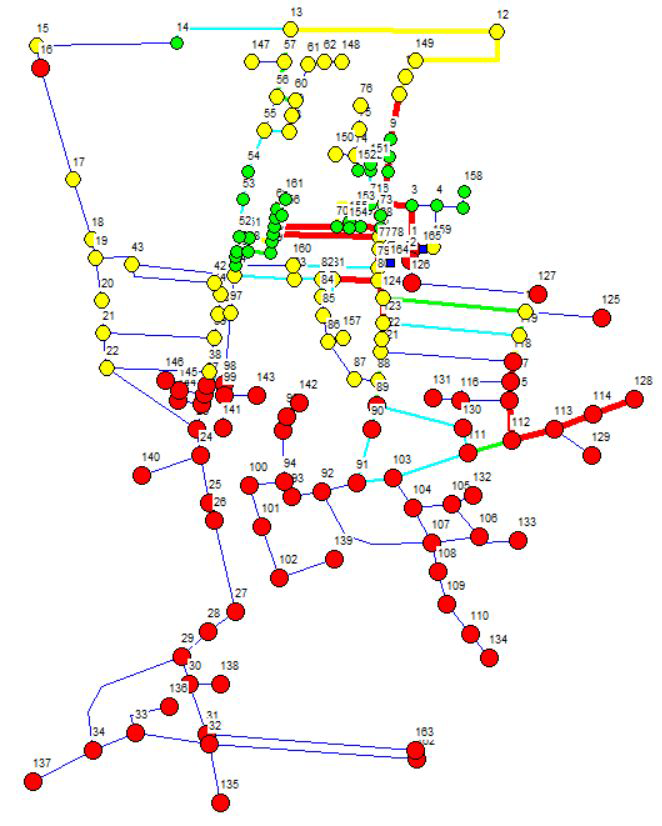
Chlorinated drinking water supply system
About 98% of cities, 91% of urban-type settlements and 23% of villages are covered by centralised water supply system services in Ukraine. The total length of water supply networks is 92,000 km, including 35% of dilapidated and emergency networks. Operating systems of centralised water supply in settlements of western Ukraine mainly use ground water.
Status at project start: No experience in applying modern methods of predicting the dissemination of pollution in drinking water supply systems
In western Ukraine, drinking water is disinfected using chlorine and its compounds (sodium hypochlorite) and UV disinfection. The water for consumers in small settlements is often supplied without regular disinfection. The lack of the necessary measuring equipment at water supply plants creates additional risks in the supply of low-quality water. The current research with the involvement of modern measuring equipment will allow practical experience to be gained, and obtain detailed information about the change in the quality of chemical and bacteriological contamination in drinking water supply systems. The assessment of potential risks to human health and measures developed to reduce them will be conducted on the basis of these studies using the experience and information resources of the project partners.
Key achievements at the end of the project
I) Implementing risk-based management through the creation of Water Safety Plans.
Three drinking water supply systems in small settlements in the west of Ukraine were studied and assessed. Hazards were identified and evaluated, which made it possible to develop Water Safety Plans.
(II) Adapting hydraulic models and establishing soft sensors for conditions
with limited data availability.
Hydraulic DWDN models were developed for three water supply systems, enabling the determination of water age in the distribution pipes. One year of water quality monitoring in the DWDNs made it possible to identify characteristic contaminants for each water supply system. The practical experience gained from EURECAT and POLIMI enables the development of soft sensors. The effectiveness of such solutions strongly depends on the volume of experimental data, which requires the installation of online sensors.
(III) Identifying regulatory and real-life gaps in Ukrainian and European drinking water quality guideline values.
Ukraine aspires to become a full member of the EU. To this end, there is ongoing harmonisation of Ukrainian legislation with EU requirements. Despite the fact that Ukrainian standards are often based on WHO recommendations, they are always fully aligned with the European directives. However, the following regulatory and real-life gaps were identified in the project: Ukrainian standards do not yet take into account emerging contaminants such as microplastics, pharmaceutical residues, PFAS, etc.; and there is a lack of regulatory documents that clearly define materials permitted to be in contact with drinking water. Another gap is insufficient monitoring and weak infrastructure, which is also related to limited funding.
Contact:
Martynov Serhii, Professor, Head of the Department of Water Supply, Sewerage, and Water Well Drilling, NUWEE (s.y.martynov (at) uwm.edu.ua);
Alla Kucherova, Head of Grant Projects Department, NUWEE (a.v.kucherova (at) uwm.edu.ua)